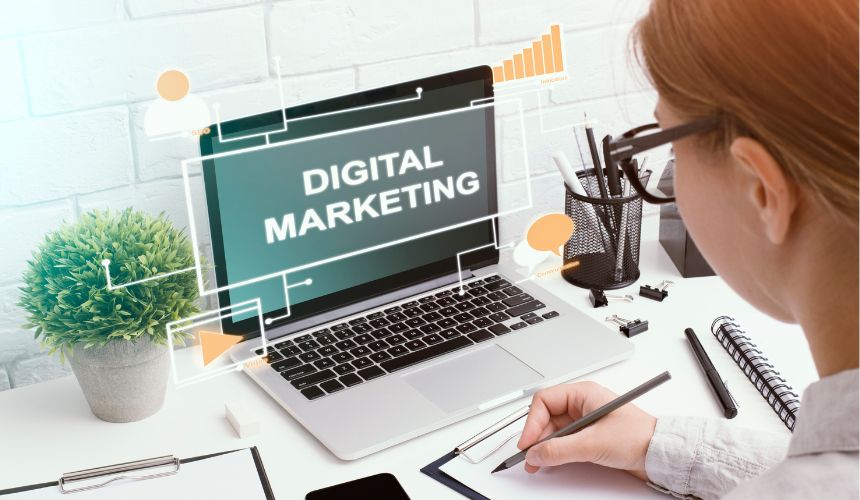
In today’s hyper-connected world, the way businesses reach and engage with their customers has changed dramatically. Gone are the days when a newspaper advertisement or a television commercial was enough to grow a brand. The rise of the internet, smartphones, and social media has given birth to a new era of marketing — digital marketing. But what exactly is digital marketing, and why has it become so indispensable for businesses of all sizes?
Simply put, digital marketing refers to all marketing efforts that use the internet or electronic devices. It encompasses a wide range of online channels — from search engines and social media to email, websites, and mobile apps — to connect brands with their target audiences. Unlike traditional marketing, digital marketing allows for precise targeting, real-time results, and measurable outcomes, making it one of the most powerful tools available to modern businesses.
The Core Channels of Digital Marketing
Digital marketing is not a single tactic but rather an umbrella term for several interconnected strategies and channels. Each plays a unique role in reaching and converting customers.
1. Search Engine Optimization (SEO)
SEO is the practice of optimizing a website so that it ranks higher in search engine results pages (SERPs) like Google or Bing. When a user types a query, search engines evaluate hundreds of factors to determine which pages are most relevant. SEO involves technical improvements to a website, creating high-quality content, and earning links from other reputable sites. Effective SEO drives organic (unpaid) traffic and builds long-term brand visibility.
2. Content Marketing
Content is the backbone of digital marketing. Content marketing involves creating and distributing valuable, relevant, and consistent content — such as blog posts, videos, infographics, podcasts, and eBooks — to attract and retain a clearly defined audience. Instead of directly pitching products or services, content marketing aims to educate, inform, or entertain, building trust and authority over time.
3. Social Media Marketing
Platforms like Facebook, Instagram, LinkedIn, TikTok, and X (formerly Twitter) have become powerful marketing channels. Social media marketing involves creating content tailored to each platform, engaging with followers, running paid advertisements, and building a community around a brand. With billions of active users worldwide, social media offers unmatched reach and the ability to foster direct, two-way conversations with customers.
4. Pay-Per-Click Advertising (PPC)
PPC is a model of internet advertising in which advertisers pay a fee each time one of their ads is clicked. Google Ads is the most popular PPC platform, allowing businesses to display ads in search results for specific keywords. PPC campaigns can generate immediate traffic and leads, making them ideal for product launches, promotions, or businesses looking for quick visibility. The key advantage of PPC is control — you set your budget, choose your audience, and measure every dollar spent.
5. Email Marketing
Despite being one of the oldest digital marketing channels, email remains one of the most effective. Email marketing involves sending targeted messages directly to a subscriber’s inbox — whether for newsletters, promotional offers, abandoned cart reminders, or personalized recommendations. With an average return on investment (ROI) of $36 for every $1 spent, email marketing continues to outperform many newer channels in terms of direct revenue generation.
6. Influencer and Affiliate Marketing
Brands increasingly partner with influencers — individuals with large, engaged social media followings — to promote their products authentically. Affiliate marketing, on the other hand, involves rewarding third-party publishers (affiliates) for driving traffic or sales to a business. Both strategies leverage the trust and reach of external voices to grow brand awareness and conversions.
Why Digital Marketing Matters
The shift toward digital marketing is not merely a trend — it is a fundamental transformation in how commerce and communication work. Here is why digital marketing has become essential:
- Global Reach: A small business can now compete on a global stage, reaching customers in any country at a fraction of traditional advertising costs.
- Precise Targeting: Digital tools allow marketers to target audiences based on demographics, interests, behaviors, location, and even purchase history.
- Measurable Results: Unlike a billboard or TV ad, every digital campaign can be tracked in real time. Marketers can monitor clicks, conversions, impressions, and ROI with precision.
- Cost Efficiency: Digital marketing is often more affordable than traditional media, especially for small and medium-sized businesses working with limited budgets.
- Customer Engagement: Social media and email enable brands to have ongoing, personalized conversations with their customers — building loyalty and long-term relationships.
The Future of Digital Marketing
Digital marketing is constantly evolving. Emerging technologies are reshaping what is possible. Artificial intelligence (AI) is transforming everything from content creation and chatbots to predictive analytics and hyper-personalization. Voice search, driven by smart speakers and virtual assistants, is changing how SEO works. Video content — particularly short-form video on platforms like TikTok, Instagram Reels, and YouTube Shorts — continues to dominate engagement metrics.
Privacy is also becoming a central concern. With increasing regulation around data use — such as GDPR in Europe and various state-level laws in the United States — marketers must find ways to personalize experiences while respecting user privacy. The shift away from third-party cookies is pushing brands to invest in first-party data strategies, building direct relationships with their audiences.
Augmented reality (AR) and virtual reality (VR) are also beginning to enter the marketing space, offering immersive product experiences. Meanwhile, the growing importance of sustainability and social responsibility means that authentic, values-driven brand storytelling is more critical than ever.
Conclusion
Digital marketing is no longer optional — it is a necessity. Whether you are a startup trying to build brand awareness, an e-commerce business looking to drive sales, or a large corporation seeking to stay relevant, digital marketing offers the tools, channels, and strategies to achieve your goals.
At its core, digital marketing is about connecting the right message with the right person at the right time. By understanding your audience, choosing the appropriate channels, and continuously measuring and optimizing your efforts, digital marketing can become your most powerful engine for sustainable business growth.
As the digital landscape continues to evolve, staying informed and adaptable will be the key to long-term success. The businesses that thrive will be those that embrace change, invest in learning, and keep the customer at the heart of every campaign.